



ABOUT US



RECLAIMING SUBJECTIVITY
8th March, 2026
GCGS Grade 11 students Ziyi Sun and Xinyue Zhao lead a multi-city interactive exhibition, redefining feminism, identity, and social responsibility from Shanghai to Shanxi.
To be sixteen is to stand at the precipice of adulthood, navigating the complex currents of identity, expectation, and self-awareness. Creating a vivid ecosystem of learning at GCGS means moving beyond the classroom to engage with the world’s most pressing social dialogues. Yet rarely is that ecosystem curated so precisely by students themselves. This academic year, two visionary Year 11 student-activists, Ziyi and Xinyue, launched a comprehensive, multi-city advocacy initiative that has transcended traditional education. The project, a seamless integration of artistic expression and community active service, began as an exhibition in Shanghai Jing’an District and Guangzhou, finally culminating in a vital educational mission to rural Shanxi. It is known simply, yet powerfully, as “Wo Men-ism” (我们主义).
I. Unchaining the Self: The Philosophy of Subjectivity
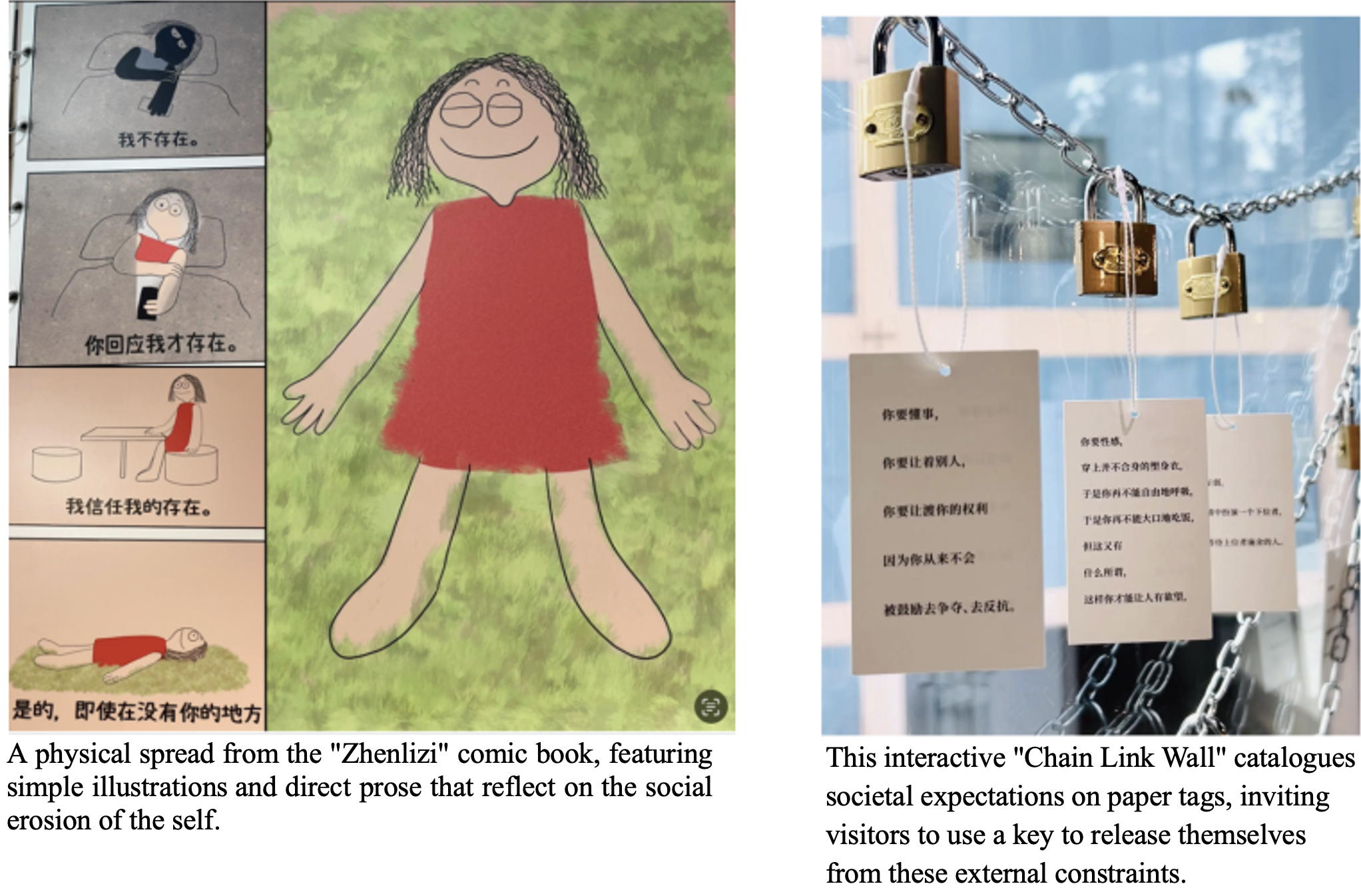
“Wo Men-ism” functions as a deliberate philosophical provocation, moving far beyond the scope of a standard art collection. The foundation of the project rests upon an intellectual inquiry into reclaiming personal subjectivity, particularly within the female experience. Existential theories were distilled into the 'proMax' comic book, where student-led illustrations created a visual language for navigating these complex ideas of being, arguing that true empowerment begins when we define our existence from within, not through external validation. This core theme of internal liberation was visually dramatized through high-impact installations, most notably the ‘Chain Wall’, which confronted visitors with symbolic iron links representing societal gender constraints and stereotypical career paths (Career vs. Family).
II. The Art of Confrontation and Collective Dialogue
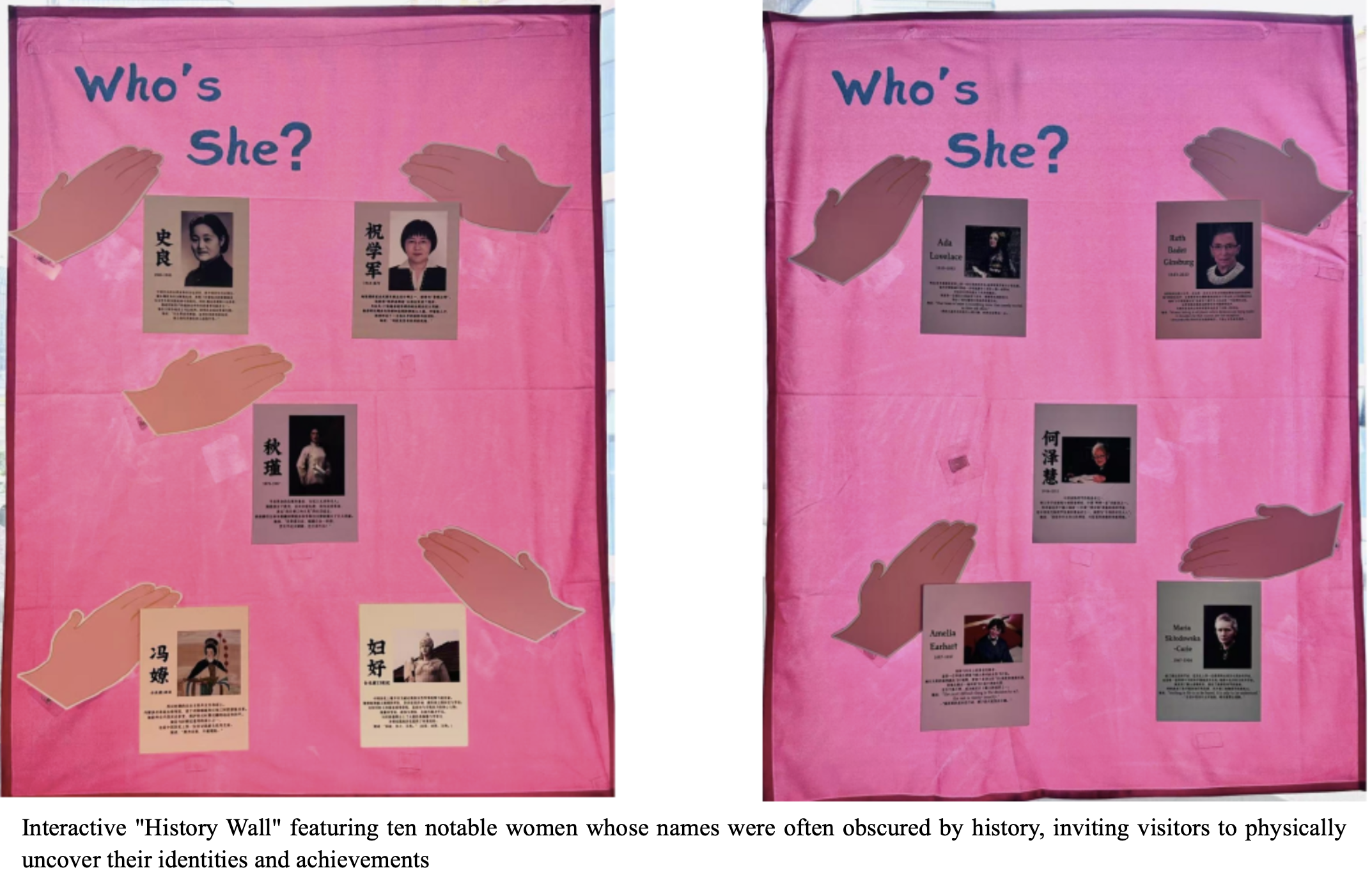
The curators skilfully utilised interactive art to turn difficult social dialogues into personal reflections. Visitors in Shanghai and Guangzhou were immediately challenged by “Haha Mirrors,” installation pieces designed with intentional distortions to force a confrontation with body anxiety and unrealistic beauty standards. This discomfort was countered by historical affirmation through the “Who's She?” History Wall, which celebrated overlooked female figures who had profoundly shaped science, society, and art. Beyond silent observation, the project prioritised “Between Us” postcard exchanges and community workshops, creating a bridge for collective dialogue where personal reflections on shared memory could anchor a restorative outlook on the future.
III. Active Impact: Say No to Harassment (勇敢说"不")
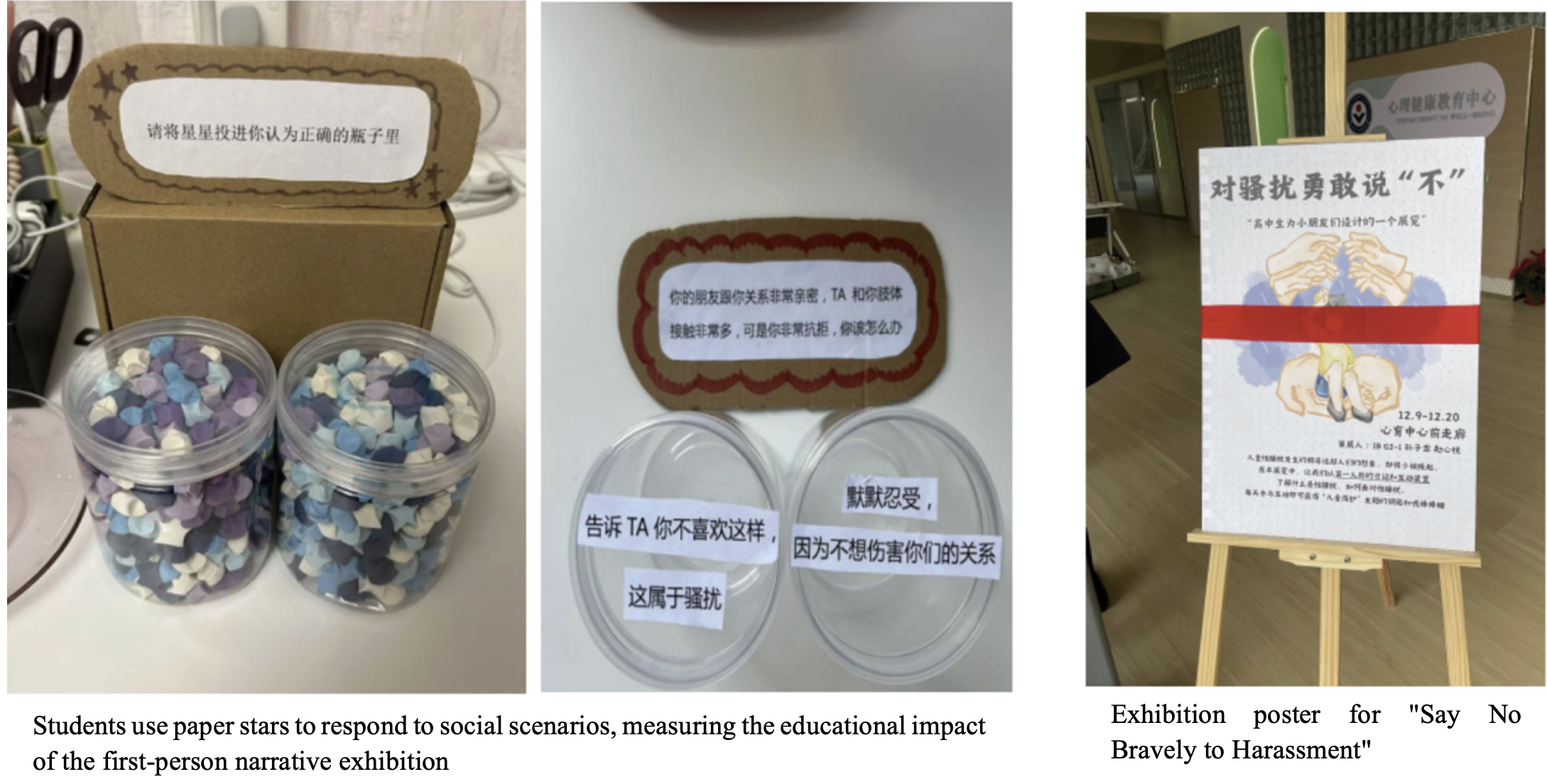
The most defining moment of the “Wo Men-ism” initiative occurred when the artistic inquiry translated directly into child protection advocacy. Understanding that true empowerment must begin with safety, the students developed the “Say No to Sexual Harassment (对骚扰勇敢说'不')” educational curriculum, tailored specifically for Grade 2-4 students. Utilising a non-threatening, story-driven “Little A’s Diary” format, they used an interactive paper star voting system to help young children grasp the concept of body autonomy and find their own voice in moments of discomfort. The effectiveness of this on-campus advocacy was measurable and significant, with over 170 messages collected during the exhibition, proving that student-led advocacy can move complex social issues from a passive display to a quantifiable impact hub.
IV. Beyond the Campus Gates: The Shanxi Rural Outreach
Extending the initiative beyond the campus gates represented the project’s most significant leap from school-based advocacy into real-world action. Equipped with their child protection curriculum, the Year 11 duo successfully executed a teaching trip to a rural school in Shanxi province, adapting their child safety materials for Grade 3-5 students. By doing so, it allowed them to deliver crucial lessons in body awareness and self-protection to a new community. Transitioning from classroom discussion to active service in rural Shanxi highlights a sophisticated level of leadership, proving that student-led advocacy is capable of reaching far beyond the campus to ignite change across provincial borders.
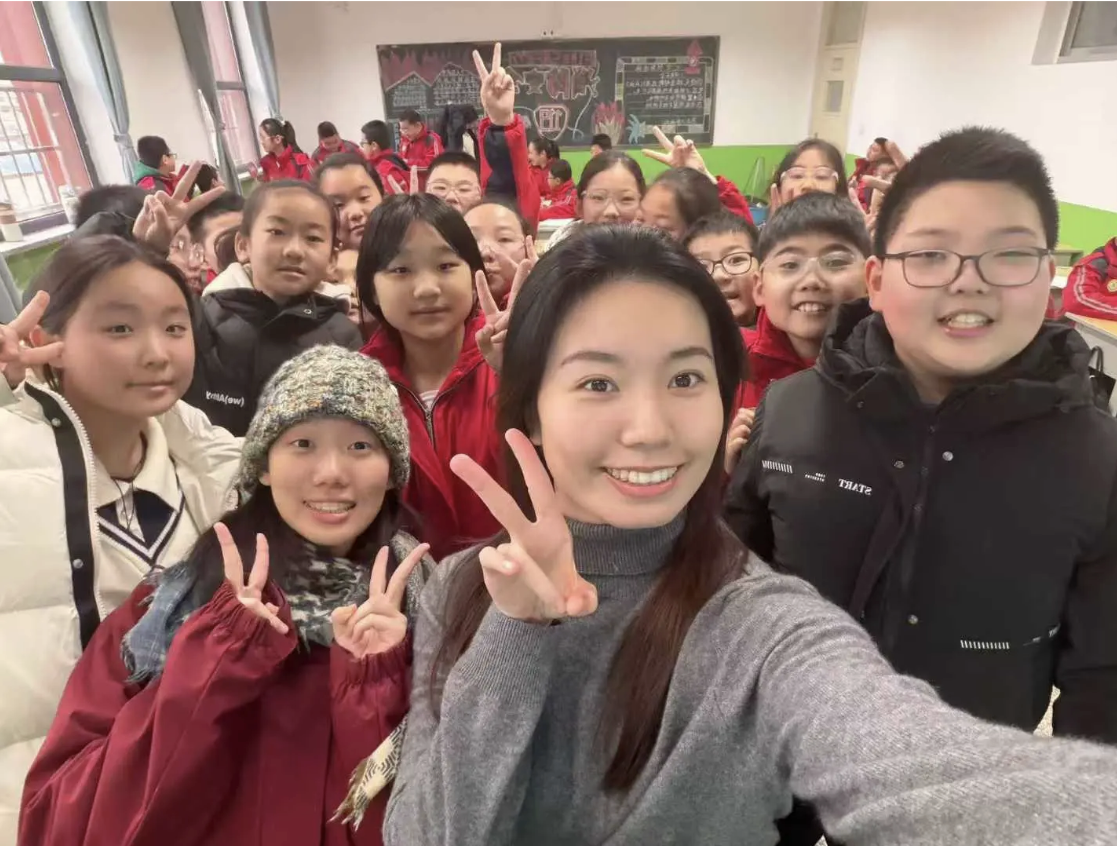
A photo featuring Xinyue (first left), Ziyi (second left) and a class in Shanxi
V. Returning to the Core: Interactive Workshops
Concluding the project, Ziyi and Xinyue facilitated several interactive workshops focused on self-identification. Sessions including “Me in the Painting” (画中我) and Nu Shu fan making allowed participants to explore identity through both traditional and modern mediums. Rather than using external personality frameworks, participants engaged in an exercise where they gave themselves specific labels to help others truly know and understand them. Hosting these sessions allowed “Wo Men-ism” to evolve into a living dialogue, ensuring its impact was rooted in the actual narratives shared by participants.
A Collective Awakening
Reflecting on this journey, we celebrate more than just a successful event. Merging artistic innovation with a concrete sense of social responsibility, Ziyi and Xinyue have set an institutional standard that inspires the whole school.