



ABOUT US



The Green Beyond the Green: A Golfer's Perspective on Sport, Space, and Sustainability
17th June, 2026
Hao Wang has become a familiar presence in student life at Guangdong Country Garden School as President of the Sports Academy Student Council and a leading voice in promoting healthy, sustainable lifestyles on campus. Whether organising athletic initiatives, encouraging participation in sport, or competing at the highest levels of junior golf, he is constantly looking for ways to make a lasting impact. Yet some of the questions that interest him most today have little to do with scorecards or rankings.
This year alone, he competed in some of the strongest events of his career. In March, he finished fifth at the CLPGQ Gionee Series, competing against both professional and amateur players. In April, he tied for second at the RG China Junior Golf Invitational, one of China’s most competitive junior tournaments. More recently, he shot an impressive 65 (-7) in Texas to qualify for the 78th U.S. Junior Amateur Championship, one of the most prestigious junior golf events in the world.
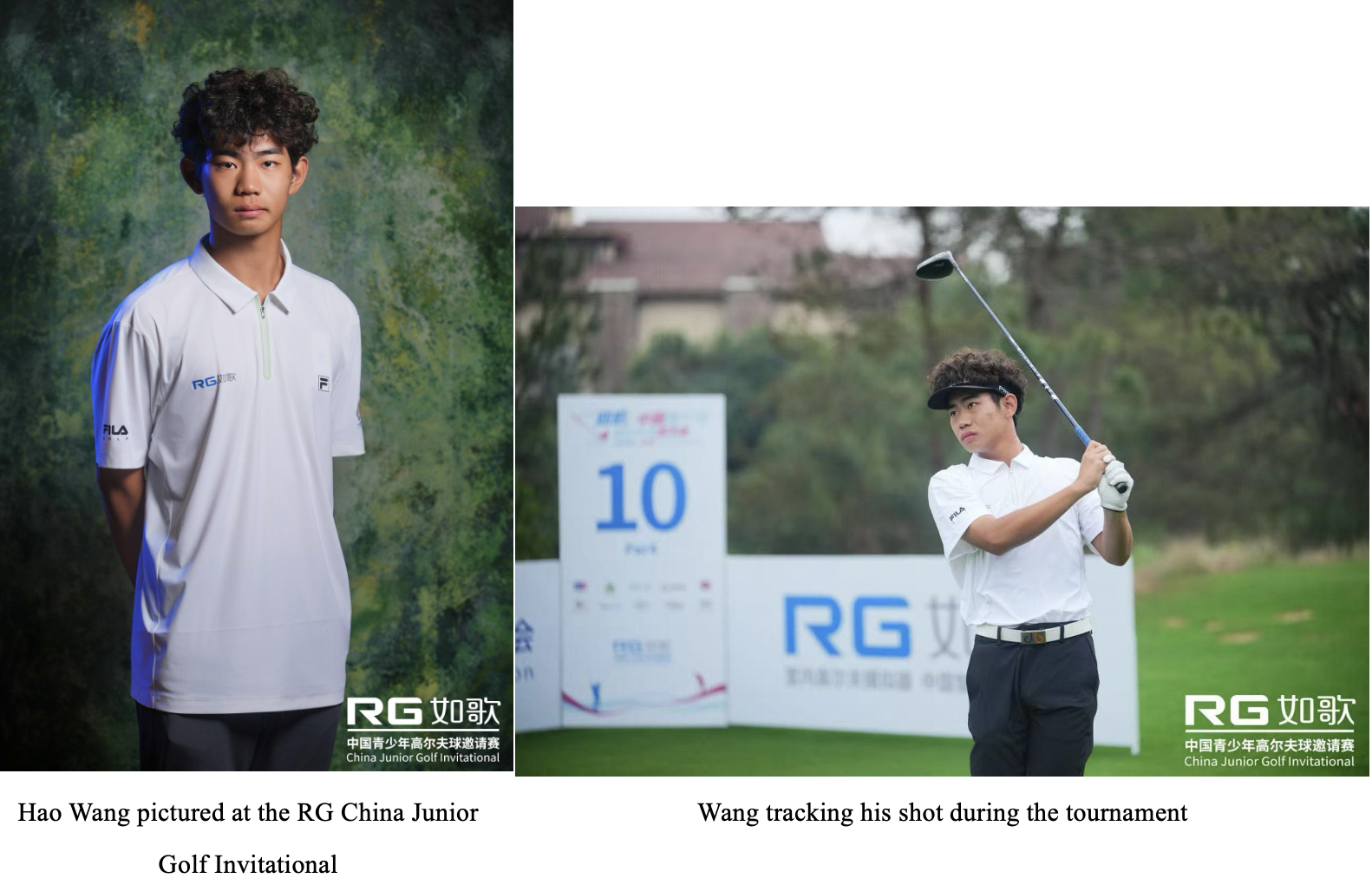
Yet for Wang, golf has become about more than performance. Years spent training and competing on courses around the world have led him to think differently about the spaces where sport takes place and the responsibilities that come with using them.
That curiosity became the starting point of After the Whistle: A Campus Sportscape Atlas.
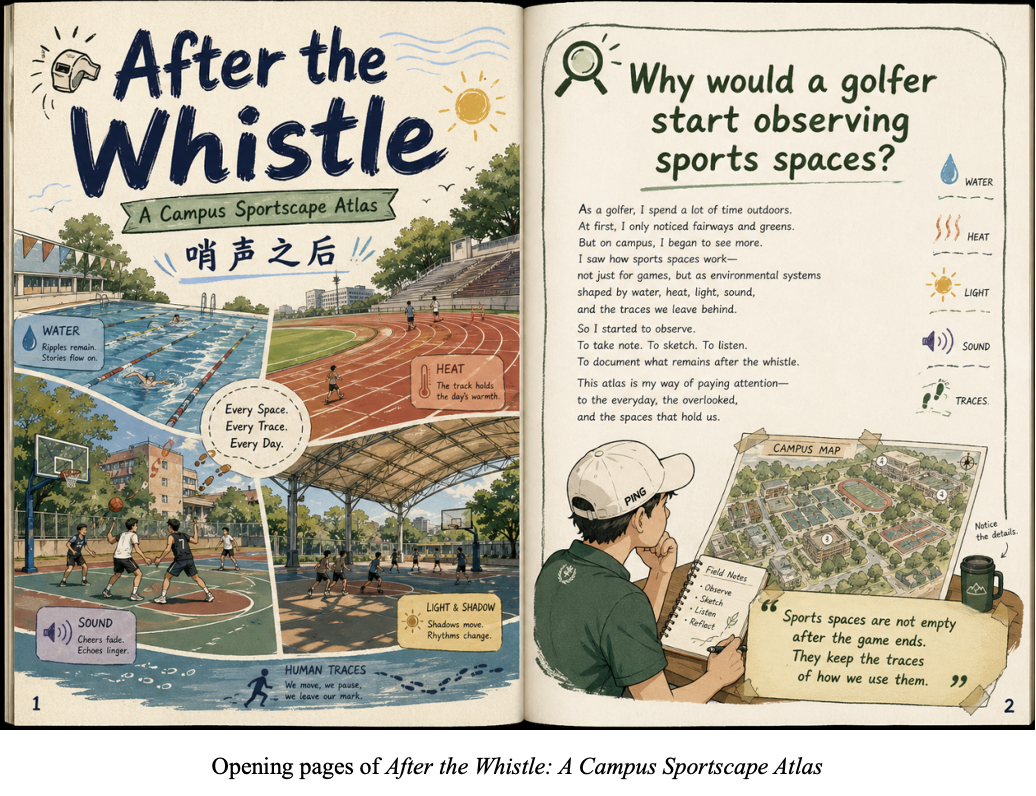
What began as a simple idea to document the sports facilities on campus soon evolved into something much larger. As Wang walked through different venues, observed student activity, recorded movement patterns, and spoke with teachers and classmates, he began asking questions that extended beyond sport itself. How do students interact with shared spaces? Why are some facilities cared for while others are overlooked? What role does environmental awareness play in everyday campus life?
One challenge quickly became clear: most students already knew where the basketball courts, swimming pool, and running track were located. Simply providing information would not be enough to engage them.
Consequently, Wang shifted the focus of the project. Rather than creating a traditional venue guide, he incorporated sustainability messages, responsible-use recommendations, and observations about how shared athletic spaces can be protected and maintained. The project gradually became less about the facilities themselves and more about the relationship between people and the environments they share.
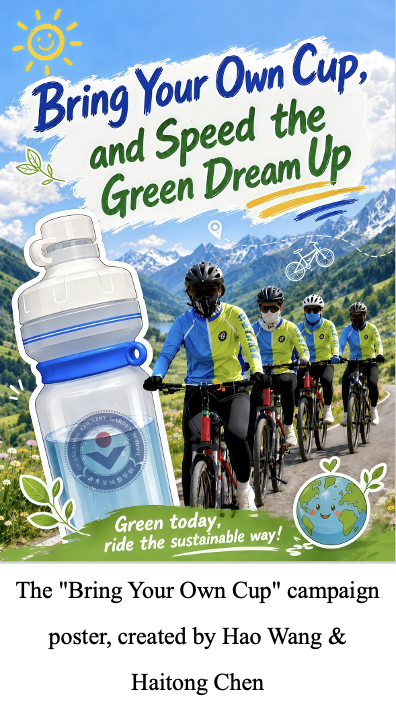
This philosophy also inspired one of his campus initiatives promoting the use of reusable water bottles among younger students participating in cycling activities. While the campaign was simple in concept, its impact could be seen through small changes in daily habits. For Wang, it was a reminder that meaningful change often begins with consistent, everyday actions.
His interest in sustainability extends beyond campus projects. As a researcher on a golf turfgrass sustainability project, he has explored topics including irrigation efficiency, soil health, and environmentally responsible course management. Drawing on his experiences as a competitive golfer, he has sought to better understand how athletic facilities can balance performance with long-term environmental responsibility.
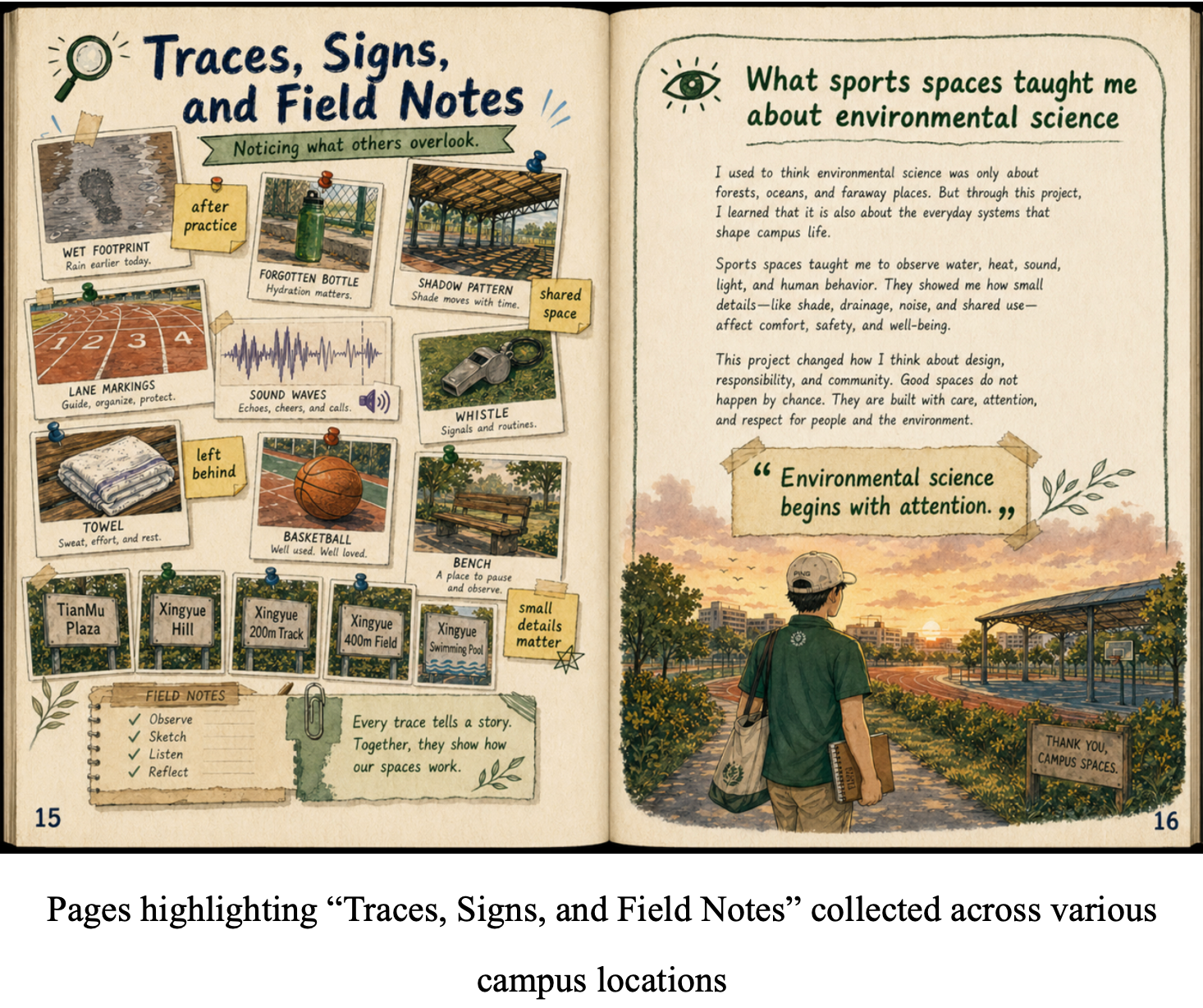
Like many athletes, he had spent years focusing on performance, training, and results. The project encouraged him to slow down and notice everything surrounding those moments: the facilities, the pathways connecting them, and the people who use them every day.
In many ways, the project changed how he experiences the campus. The spaces themselves have not changed, but the way he sees them has.